Meet the Master - Robert Bateman
 Kerri Dixon
Meet wildlife art master Robert Bateman and explore how his quiet nature scenes, composition and conservation focus shaped wildlife painting.
If you’re a wildlife artist, there’s a good chance you’ve heard the name Robert Bateman.
Even if you don’t immediately recognize the name, you’ve probably seen his work. His paintings of wolves, ravens, elk, bears and owls have become some of the most widely recognized wildlife images in the world.
Bateman is often described as one of the most influential wildlife painters of the last century. But what makes his work so powerful isn’t just that he paints animals well. It’s the way he composes a scene and captures a moment in nature.
For artists, studying masters like Bateman can teach us a lot about storytelling, composition and atmosphere in wildlife art.
Who Is Robert Bateman?
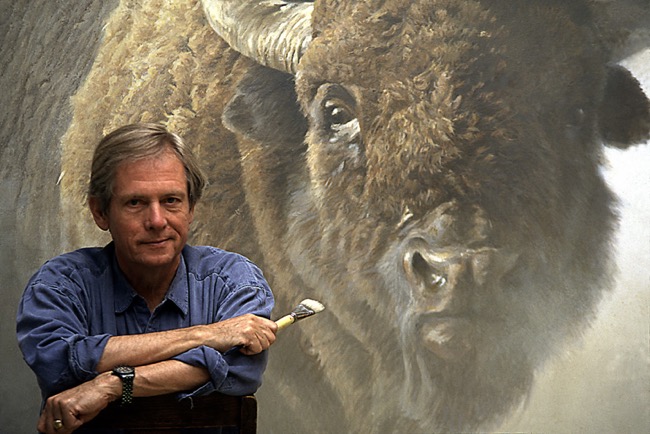
Robert Bateman was born in 1930 in Toronto, Canada. Before becoming a full-time artist, he actually worked as a teacher and naturalist, which had a huge influence on how he approaches painting.
His deep interest in ecology and wildlife behaviour shaped the way he sees the natural world. Instead of focusing only on the animal, Bateman paints the environment the animal belongs to.
His work became hugely popular during the 1970s and 80s when wildlife conservation was gaining momentum. His paintings were widely reproduced as prints and helped bring attention to the beauty and fragility of natural habitats.
Today his paintings are held in collections and galleries around the world.
Bateman Paints Moments in Nature
One of the most noticeable things about Bateman’s work is the sense of stillness.
Many wildlife paintings focus on dramatic action — animals running, fighting or hunting. Bateman often chooses a quieter moment.
You might see:
-
a wolf standing in the snow
-
a raven perched on a branch
-
an elk resting in winter
These quiet scenes create a feeling of observation. It’s almost as though you’ve just stumbled across the animal in its natural habitat.
That sense of atmosphere makes the painting feel believable and immersive.
Composition That Feels Like a Real Encounter
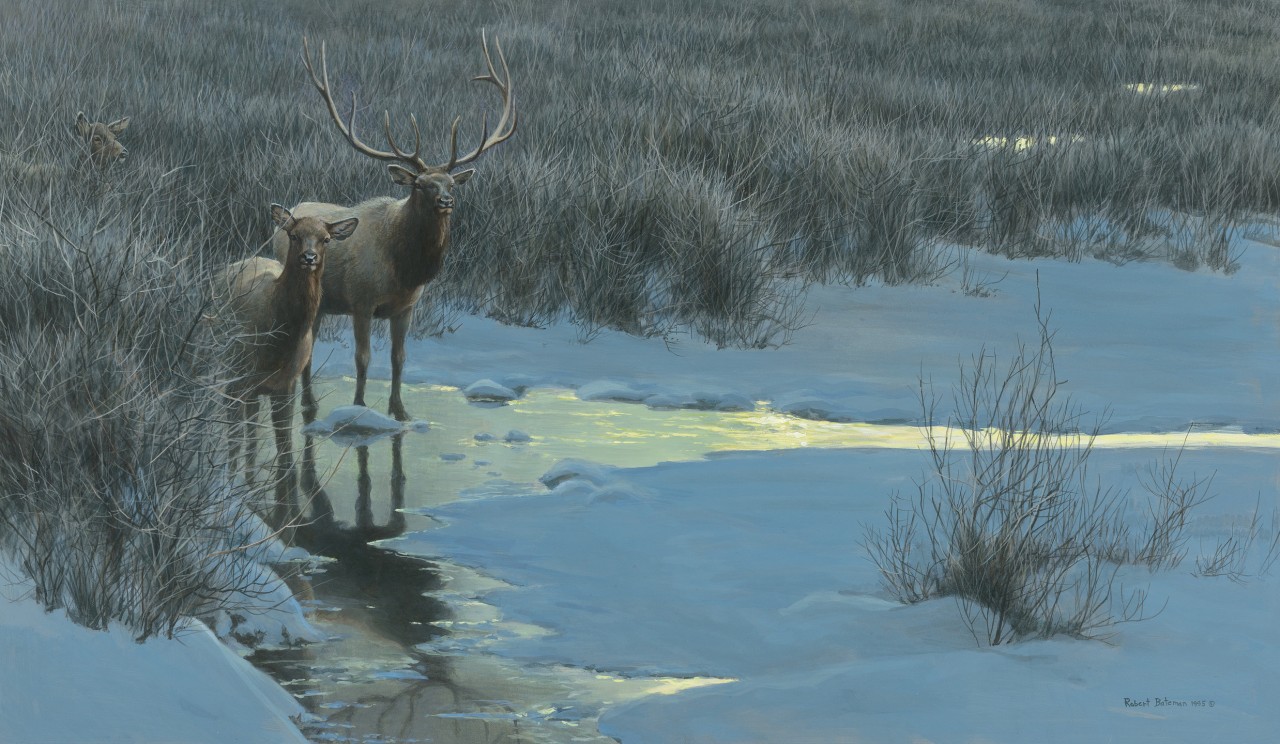
Another interesting aspect of Bateman’s work is how he handles composition.
In many wildlife paintings, the animal fills most of the canvas like a portrait. Bateman often does the opposite.
Sometimes the animal is quite small within the overall scene.
The landscape might take up most of the painting — a snowy forest, a lake, or a wide open landscape. The animal becomes part of that environment rather than dominating it.
This approach changes how the viewer experiences the painting. Instead of immediately focusing on the animal, the viewer explores the scene and discovers it.
That moment of discovery mirrors what it feels like to encounter wildlife in the real world.
The Importance of Value and Contrast
Bateman also has a strong understanding of value design.
He often uses contrast between light and dark areas to guide the viewer’s eye.
For example, you might see:
-
a dark wolf against pale snow
-
a light bird against a shadowed forest
-
an animal silhouetted against the sky
These value relationships help create a clear focal point even when the animal is small in the composition.
For artists working in mediums like soft pastels, charcoal or graphite, this kind of value control is especially important.
A Wildlife Artist Who Understands Landscape
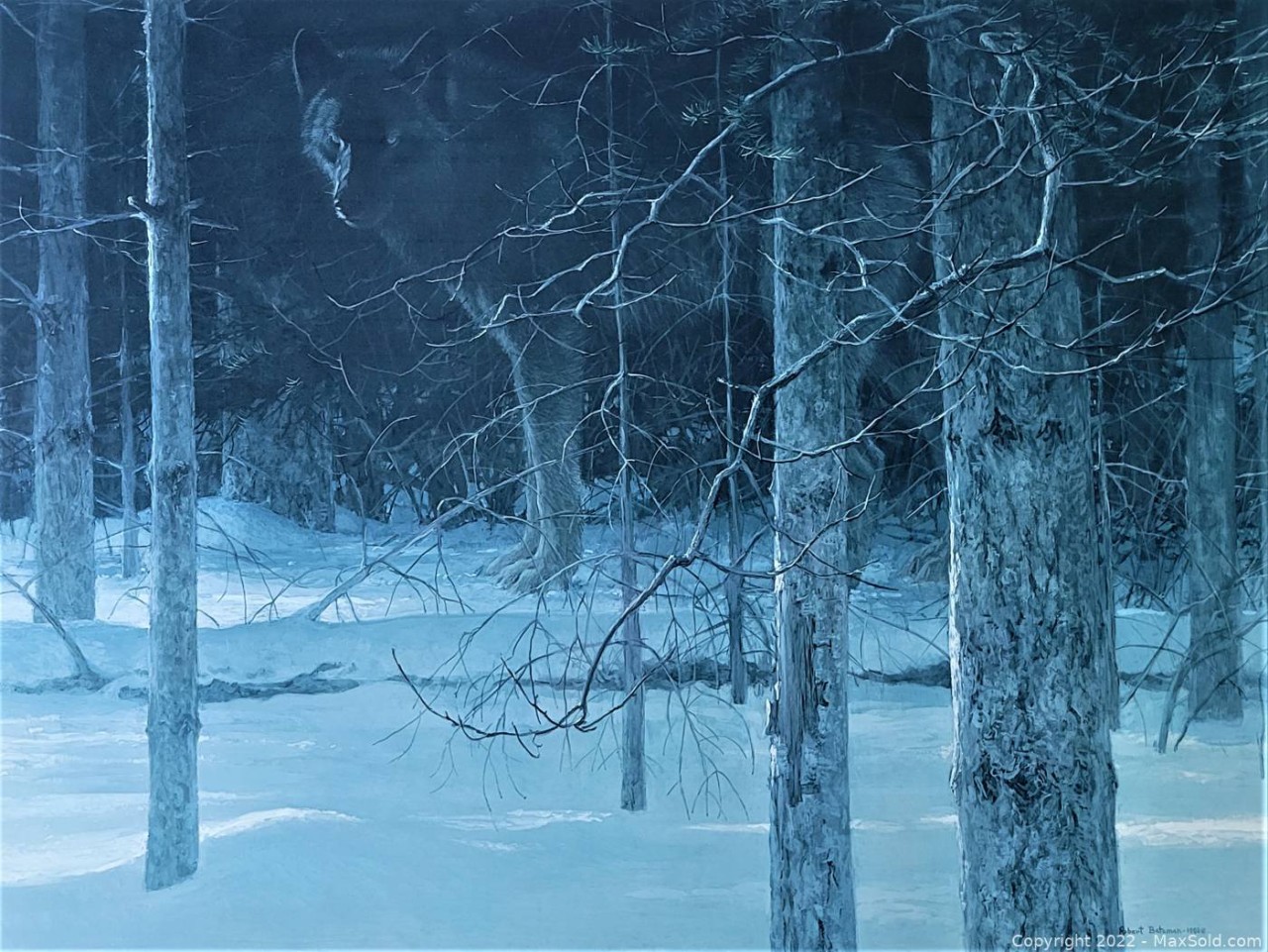
Although Bateman is known primarily as a wildlife artist, he is also an incredibly strong landscape painter.
His environments are carefully observed and thoughtfully composed. The forests, lakes and snowy landscapes in his paintings feel atmospheric and believable.
This is something I often encourage my own students to think about.
Animals don’t exist in isolation. They live inside ecosystems and landscapes.
Understanding those environments helps artists create more convincing and meaningful wildlife paintings.
We might actually dive deeper into that idea in a future Tuesday Art Chat, because the connection between wildlife art and landscape painting is a fascinating topic on its own.
Why Studying Master Artists Matters
Studying artists like Robert Bateman isn’t about copying their style.
Instead, it’s about understanding the decisions they make.
How do they compose a scene?
How do they guide the viewer’s eye?
How do they create atmosphere and storytelling?
Looking closely at the work of master artists helps us develop a deeper understanding of our own creative process.
Final Thoughts
Robert Bateman’s paintings remind us that wildlife art is about more than just the animal.
It’s about the environment, the atmosphere and the quiet moments that happen in nature.
If you haven’t spent time studying his work before, I highly recommend taking a closer look. Pay attention to how he places animals within the landscape and how he uses light and composition to tell a story.
There’s a lot we can learn from artists who observe the natural world so carefully.
Make sure to check out his instagram page and watch some of the short videos of him discussing his paintings.
https://www.instagram.com/robe...
Kerri xx
Categories: : educational, meet the masters
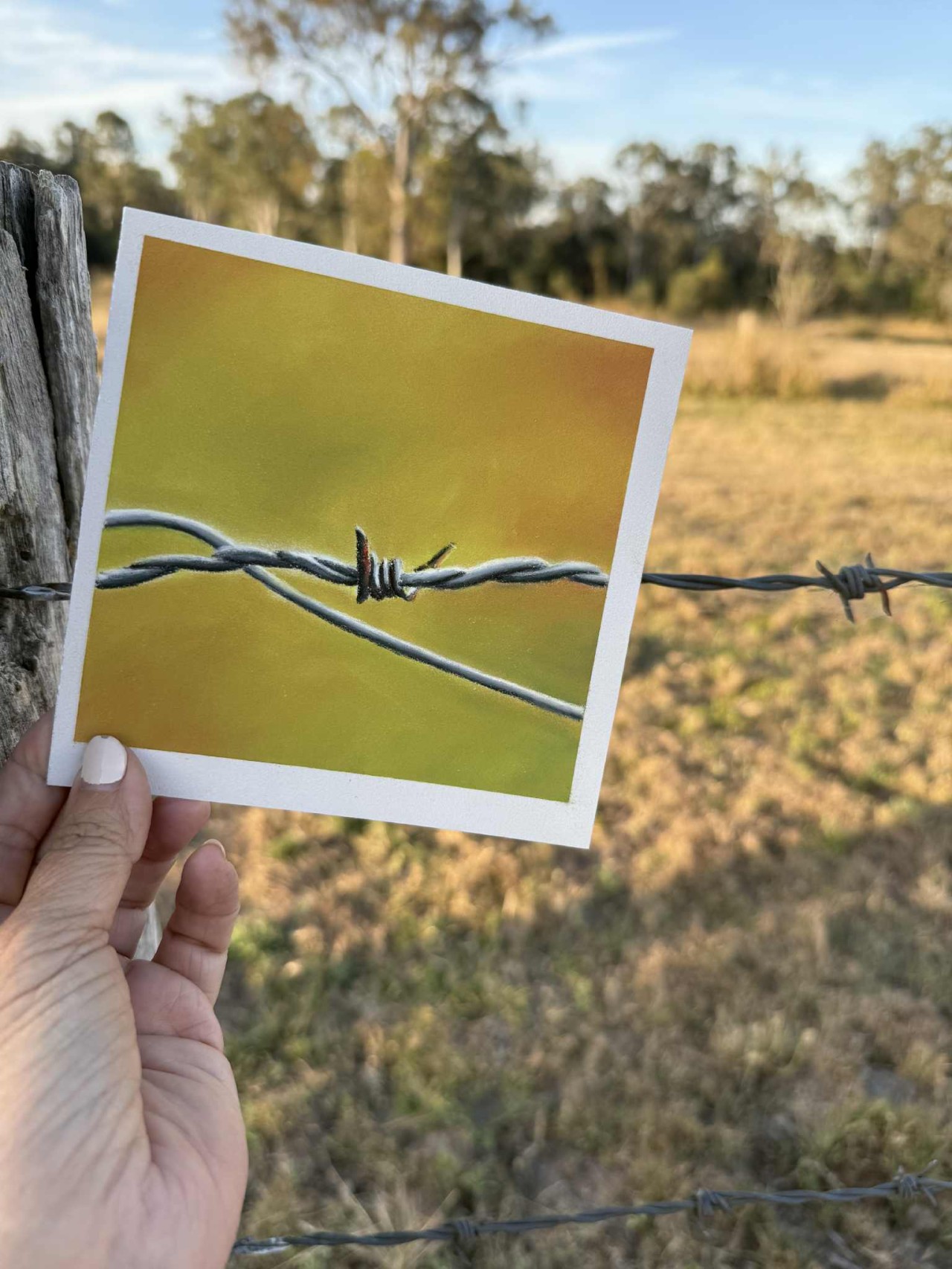
Want to learn about Soft Pastels?
Click on the button to register and get instant access to the free Pastel Basics for Beginners workshop.
Listen as I walk you through the essentials supplies needed to get started in Pastel painting.
I teach you how to create this little barbed wire piece during the class. Everything you need is in the PDF workbook you'll receive when you register.