The Artist's Story Arc
 Kerri Dixon
Learn a simple 7-step story arc to explain your artwork, write artist statements, and add meaning—even when using Pixabay references.
The Artist’s Story Arc: How to Talk About Your Art (Even If You’re a Beginner)
If you’ve ever stared at a blank caption box thinking “I have no idea what to write about this painting”, you’re definitely not alone.
Most artists — especially beginners — feel awkward, shy, or totally stuck when it comes to talking about their work.
And as soon as someone says **“write an artist statement”… instant panic.
The good news?
You don’t need fancy words.
You don’t need a dramatic backstory.
You don’t need decades of experience.
All you need is a simple, beginner-friendly story arc.
A story arc helps you explain:
-
what inspired your piece
-
what happened during the process
-
what you learned
and what the artwork actually means to you
Let’s break it down.
What Is the Artist’s Story Arc?
This is an easy 7-step storytelling structure designed specifically for artists — no jargon, no stress, no overthinking.
Think of it like filling in the blanks.
Here are the seven steps:
1. The Everyday World (your normal life)
Where were you? What was happening when this artwork started?
2. The Spark (the inspiration)
What made you want to paint this particular subject?
3. The Rising Action (the messy middle)
What challenges popped up? What went wrong? What frustrated you?
4. The Turning Point (the breakthrough)
What moment made everything finally “click”?
5. The Payoff (the result)
The final artwork, or a detail you’re proud of.
6. The Reflection (the meaning)
What did you learn? Why does this piece matter to you?
7. The Invitation (optional)
A question or thought you leave the viewer with.
You don’t need all seven every time — even two or three make a beautiful story — but the full arc is perfect for:
-
social media posts
-
exhibition labels
-
talking about your art
-
competition entries
-
your website
-
and of course… writing your first artist statement
Example: Using the Story Arc for My Painting “The New Girl”
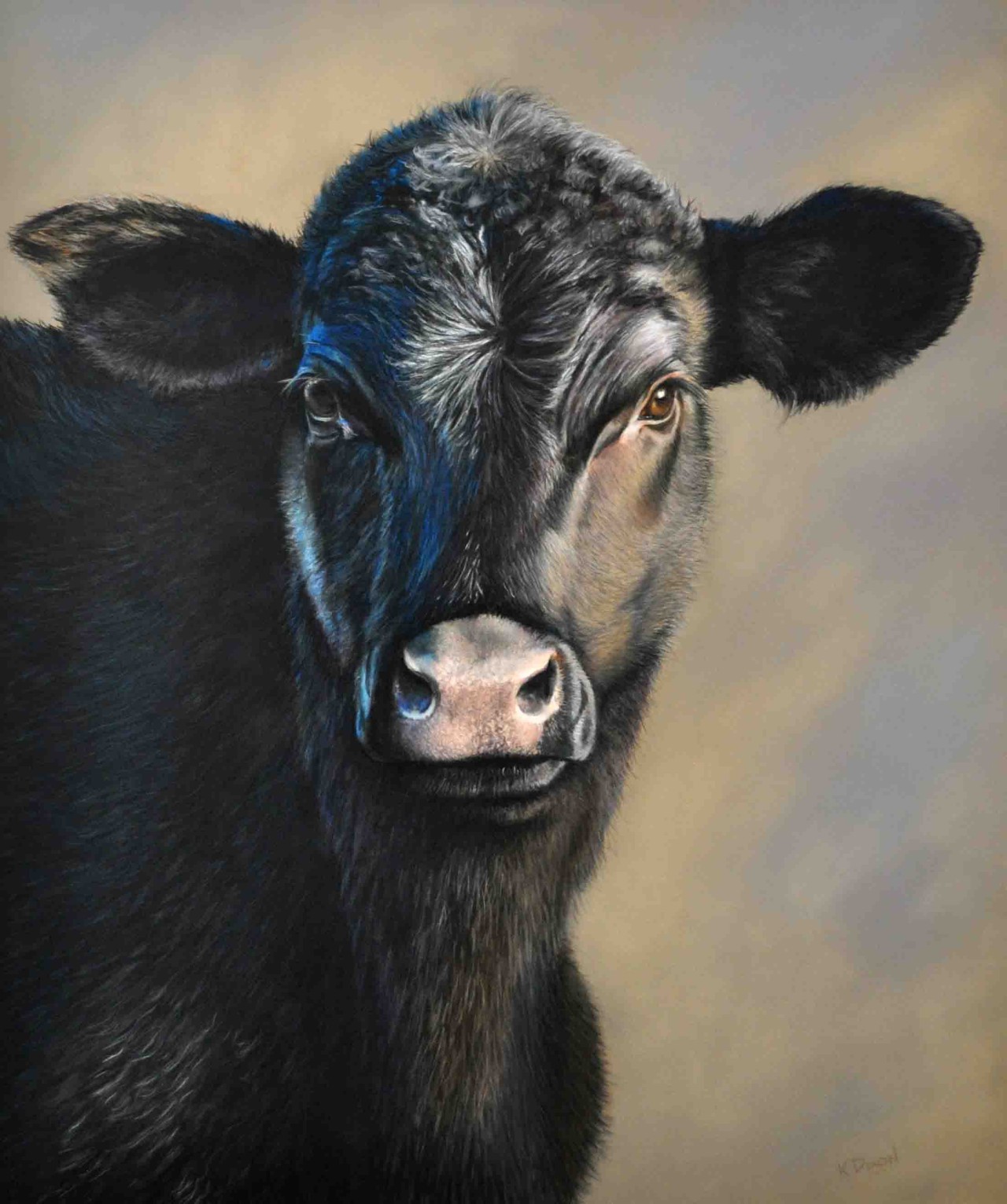
Let me show you exactly how this works using a recent pastel painting I did called “The New Girl.”
1. Everyday World
We’d just brought home a small group of new Black Brangus heifers. I was out checking on them one morning, cup of chai in hand, the usual farm routine.
2. The Spark
One heifer caught my attention immediately — calm, curious, and surprisingly friendly for someone brand new to our paddocks.
3. The Rising Action
I loved the idea of painting her, but painting black animals in pastel is no joke. Halfway through, she looked like a vague shadow blob. Flat. Patchy. Zero personality. The ugly stage hit hard.
4. The Turning Point
Then one morning the light hit her perfectly.
The entire sunlit side of her coat glowed with warm browns, and the shadow side transformed into cool purples and deep blues. THAT was the breakthrough — the moment I finally understood how to bring her to life.
5. The Payoff
The finished piece ended up being 70cm x 50cm in soft pastel, capturing that exact warm-cool contrast I saw on the farm.
6. The Reflection
What I loved most was how her personality guided me — gentle, curious, steady. A perfect mix of newness and calm.
7. Invitation
If you’ve ever painted a black animal, you’ll know exactly how fun (and tricky!) all those hidden colours can be.
And that’s the entire story — simple, honest, real.
Turning Your Story Arc Into an Artist Statement
Beginners often think an artist statement needs to sound academic or complicated.
But really?
An artist statement is just your story arc written in a clean, polished paragraph.
Here’s “The New Girl” as an artist statement:
**“The New Girl began on an early morning walk through our paddocks, checking on a group of Black Brangus heifers we’d just brought onto the farm. One heifer stood out immediately with her calm, curious presence. The inspiration for this artwork came when the morning light revealed the rich warm browns in her coat, contrasted by cool purples and blues in the shadows.
Working in soft pastel, the challenge was avoiding the flatness that often happens with dark-coated animals. The breakthrough came when I focused on layering subtle temperature shifts rather than relying on pure black.
This piece reflects both her gentle temperament and that quiet moment of connection when an animal lets you in. She represents the beginning of new relationships on the farm — calm, cautious, and full of possibility.”**
See?
Warm. Clear. No fluff.
Anyone can write this — including beginners.
But What If You Used a Pixabay or Unsplash Photo?
This is a HUGE one for beginners.
Most think:
“I didn’t take the photo, so I don’t have a story.”
Not true.
Your story doesn’t have to be about the photographer.
Your story is about YOUR experience painting it.
You can write a beautiful story (and artist statement) using:
✔ Why you chose the image
-
“The lighting drew me in.”
-
“I loved the expression.”
-
“I wanted to practise feathers.”
✔ What emotion it gave you
-
calm
-
power
-
curiosity
-
nostalgia
✔ What you wanted to learn
-
fur texture
-
values
-
warm/cool contrast
-
backgrounds
-
layering
✔ What the animal symbolises to YOU
-
owls = wisdom
-
elephants = family
-
cows = calm
-
foxes = adaptability
-
wolves = loyalty
-
birds = freedom
✔ What challenged you
-
proportions
-
colours
-
blending
-
shadows
✔ Your breakthrough moment
-
“Once I deepened the shadows…”
-
“When I softened the edges…”
✔ What you hope viewers feel
-
peace
-
strength
-
curiosity
That’s ALL you need for a meaningful artist statement.
Example: Artist Statement From a Pixabay Image

Here’s a full example using a random Pixabay owl photo:
**“I chose this owl reference from Pixabay because the softness in its eyes immediately drew me in. I used this piece as a way to practise subtle feather textures and gentle lighting in soft pastel.
The middle stages were challenging — the feathers looked flat and lacked depth, and I nearly gave up. Things shifted when I softened the edges and focused more on the underlying values.
For me, owls symbolise wisdom and quiet observation, and that’s the feeling I wanted to capture. I hope this artwork brings viewers a sense of calm and stillness.”**
Beautiful.
Simple.
Beginner-friendly.
Works every time.
Final Thoughts
You don’t need dramatic stories to talk about your art.
The everyday moments…
the spark of inspiration…
the messy middle…
the breakthroughs…
the meaning YOU bring to the piece…
— that’s where your story lives.
So whether you’re posting on social media, entering a competition, hanging work in an exhibition, or writing your very first artist statement, the Artist’s Story Arc gives you a simple, gentle framework to guide you.
Kerri xx
To learn realistic wildlife and nature art in soft pastels with me, just head over to THE CREATIVE BARN MEMBERSHIP TO LEARN MORE
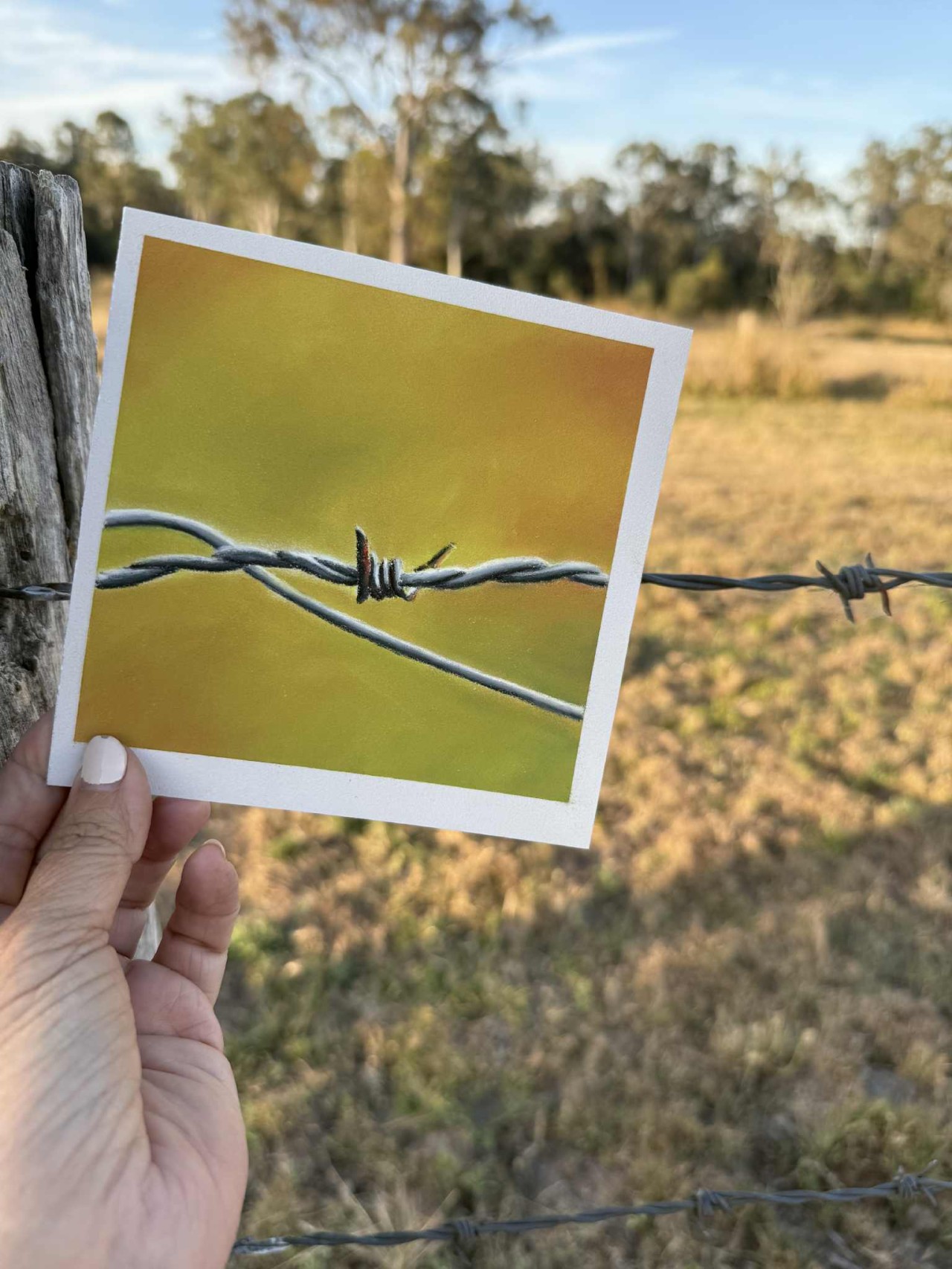
Want to learn about Soft Pastels?
Click on the button to register and get instant access to the free Pastel Basics for Beginners workshop.
Listen as I walk you through the essentials supplies needed to get started in Pastel painting.
I teach you how to create this little barbed wire piece during the class. Everything you need is in the PDF workbook you'll receive when you register.