Abstract Realism: Beyond the Photograph
 Kerri Dixon
Abstract realism: where realism dissolves into abstraction, helping artists move from technique to personal expression.
Abstract Realism: Beyond the Photograph
Lately I've found myself going down a bit of a rabbit hole exploring a style of art called abstract realism.
At first, I was drawn to it simply because I loved the look of it. The expressive marks, the bold colours, the feeling of movement and energy that seemed to exist alongside realistic subjects. As a wildlife artist who has spent years focusing on realism, I found myself fascinated by artists who could create work that felt both realistic and abstract at the same time.
But the more I researched the subject, the more I realised that abstract realism isn't just another art style.
It's really a different way of thinking about creating art.
And perhaps more importantly, it's a different way of thinking about artistic voice.
A Lesson From The Doyles
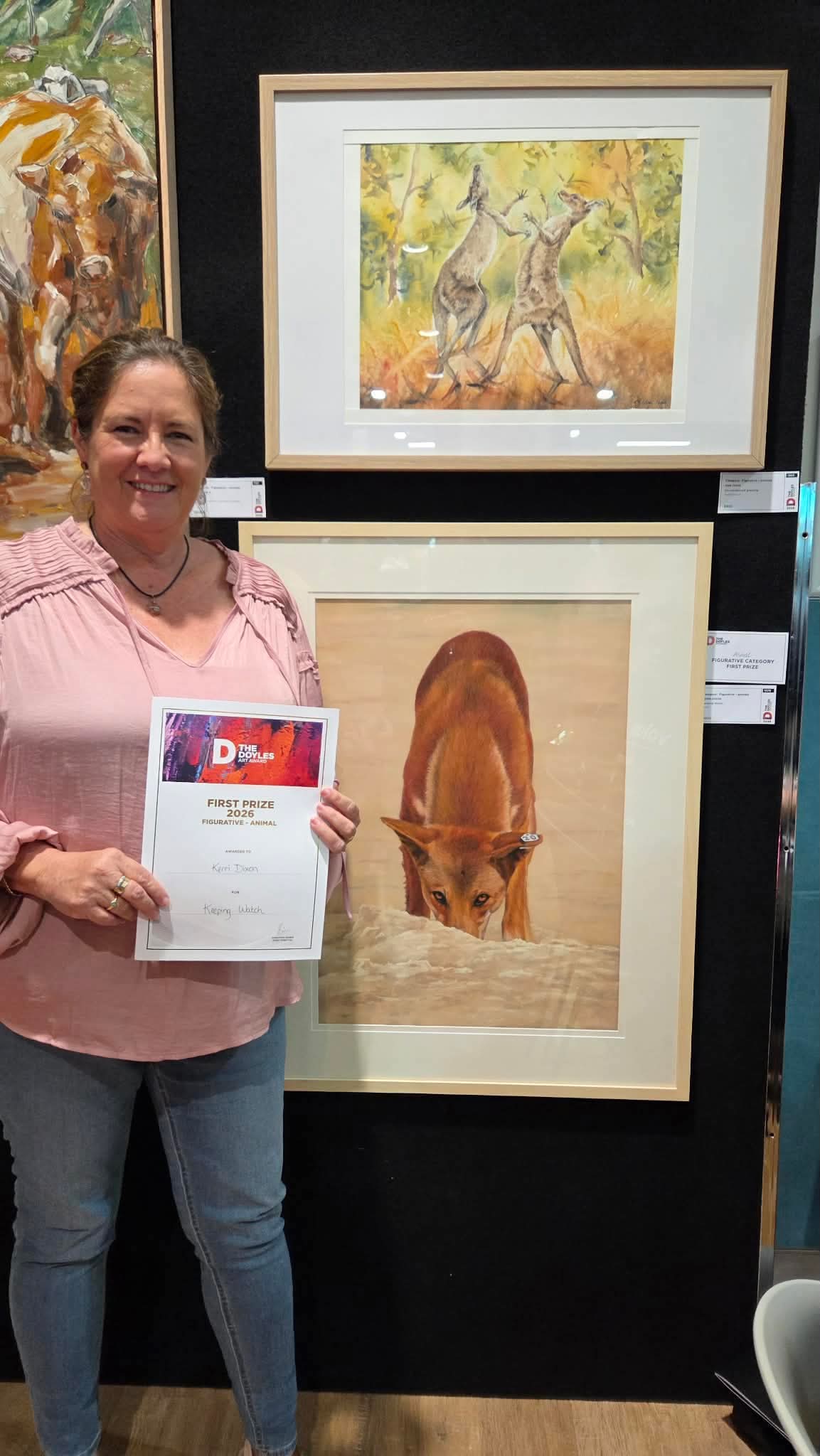
Recently I was fortunate enough to win the animal section at the Doyles Art Awards with one of my dingo paintings.
After the awards, I spent quite a bit of time looking at the other entries. The painting that came second was absolutely stunning. The technical skill was incredible. The detail was extraordinary. Every element had been executed beautifully.
Yet standing there looking at both paintings, I found myself reflecting on what people had connected with in my dingo painting.
It wasn't necessarily the detail.
It wasn't the fur.
It wasn't even the technical side of the painting.
It was the eyes.
That intense stare.
That feeling of being watched.
That sense of alertness and awareness that people seemed to respond to.
It made me realise something important.
Art isn't always about how much detail we can add.
Sometimes it's about what people feel when they look at it.
And perhaps that's what has been drawing me towards abstract realism.
What Is Abstract Realism?
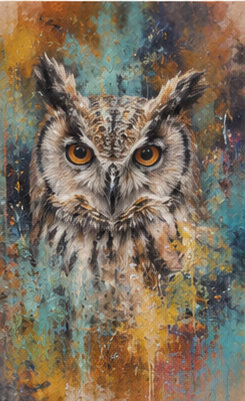
For a long time, I thought abstract realism simply meant painting a realistic subject on an abstract background.
I've painted works like that myself.
A realistic animal with watercolour splashes, loose marks or expressive colours behind it.
But recently I came across an artist explaining abstract realism in a way that completely changed my understanding.
True abstract realism isn't a realistic subject sitting on top of abstraction.
It's where realism begins to dissolve into abstraction.
The subject and the abstract elements become intertwined.
A feather becomes a shape.
A shape becomes a mark.
A mark becomes colour.
A realistic animal gradually transitions into abstraction until the viewer can no longer tell exactly where one ends and the other begins.
The magic happens in that transition.
That space between reality and imagination.
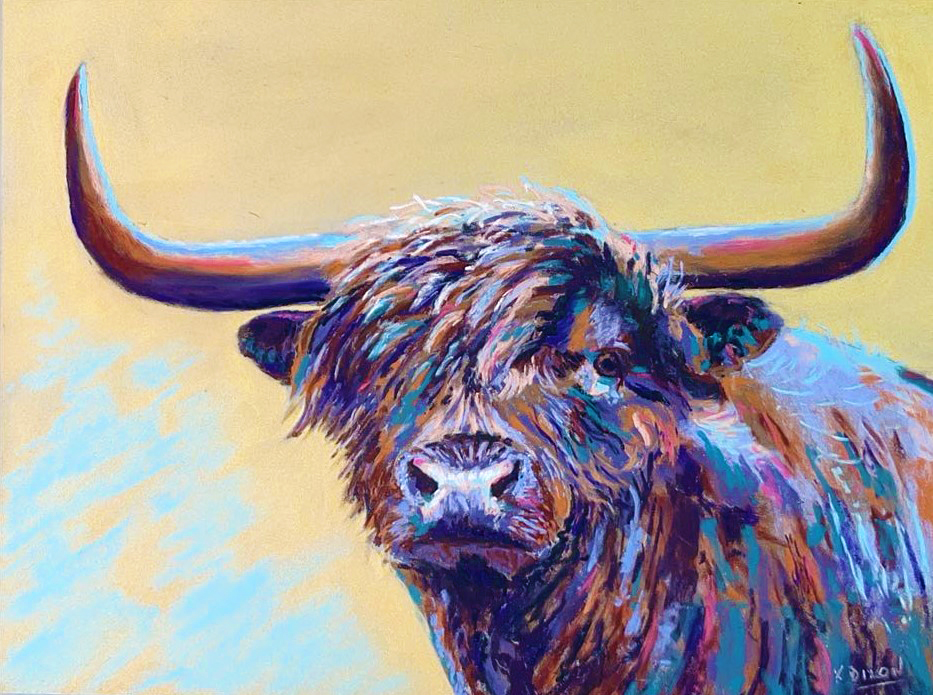
Do We Learn Realism So We Can Eventually Let Go?
One question has been circling around in my head ever since I started exploring this idea.
Do we spend years learning realism so that eventually we can choose what to leave out?
When we're beginners, we're trying to include everything.
Every feather.
Every whisker.
Every blade of grass.
Every tiny detail.
But when I look at artists working in abstract realism, I don't see artists who lack technical skill.
I see artists who understand realism so well that they can choose what matters most.
They know where to focus the viewer's attention.
They know when to lose an edge.
They know when to simplify.
They know when to let colour, texture and atmosphere do some of the storytelling.
Perhaps artistic growth isn't always about adding more.
Sometimes it's about knowing what can be left behind.
The Difference Between Learning and Creating
This doesn't mean that working from a single reference photo is wrong.
In fact, I think it's one of the best ways to learn.
When we're developing our skills, we need to focus on the fundamentals.
Drawing.
Values.
Colour.
Edges.
Texture.
Trying to design original compositions, create concepts and master technique all at the same time can feel overwhelming.
That's why in The Creative Barn we often work from a single reference image, especially when learning a new technique.
The goal is education.
The reference photo becomes a tool that helps us build our skills.
But eventually many artists reach a point where they begin asking a different question.
How do I create artwork that feels more like me?
And that's where things become really interesting.
The Photograph Isn't The Finish Line
One of the most fascinating ideas I encountered while researching abstract realism was the concept of artistic voice.
Think about a great photograph for a moment.
The photographer has already made countless creative decisions.
They chose the angle.
The lighting.
The composition.
The focal point.
The exact moment the image was captured.
All of those choices contribute to the photographer's voice.
When we copy a photograph exactly, we're often following someone else's creative decisions.
As artists develop, many begin moving beyond simply reproducing photographs and start making more of those decisions themselves.
That's where personal style begins to emerge.
Becoming A Collector Of Ideas
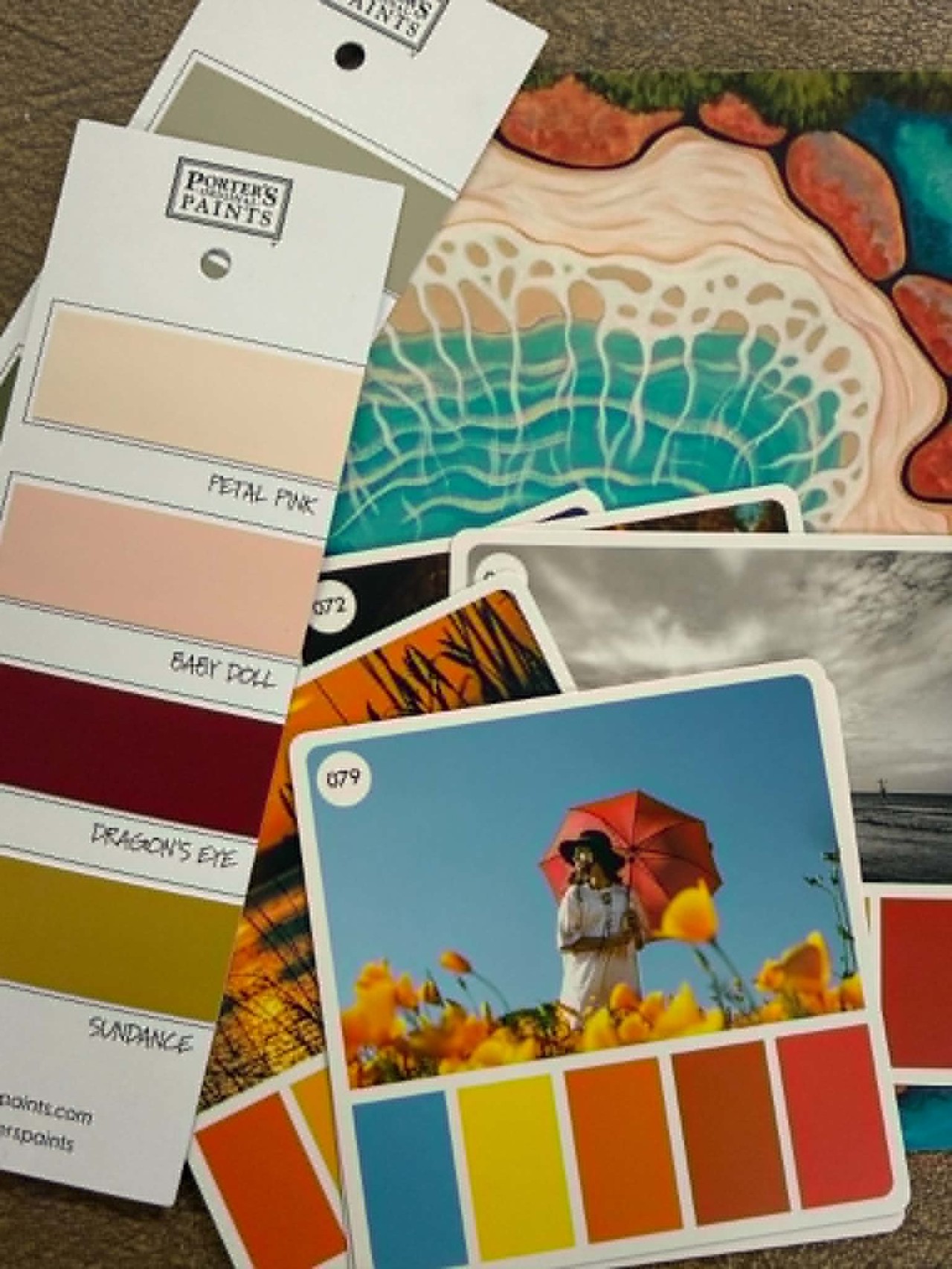
Many abstract realist artists don't begin with a single reference image.
They begin with a collection of inspiration.
An owl photograph.
A colour palette from a sunset.
A texture from peeling paint.
A composition inspired by another artwork.
A pattern found in nature.
An abstract painting that sparks an idea.
Rather than searching for the perfect photo, they gather ingredients.
Some artists create idea boards using tools like Canva, Procreate, Photoshop or Pixelmator.
These boards become visual collections of colours, textures, compositions, subjects and moods that help guide the painting.
The final artwork doesn't exist in any one photograph.
It's built from many different ideas.
And because no two artists gather exactly the same ingredients, the result becomes uniquely their own.
Beyond The Photograph
Perhaps that's the biggest lesson I've taken from this exploration.
For years I've focused on creating realistic artwork.
And I still love realism.
I always will.
But perhaps realism isn't the destination.
Perhaps it's the foundation.
The thing that allows us to communicate something deeper.
Not just what an animal looked like.
But what it felt like to stand in front of it.
What it felt like to lock eyes with it.
What it felt like to experience that moment.
Because at the end of the day, a photograph can show us what something looks like.
Art has the ability to show us what it feels like.
And maybe that's where the most exciting part of the journey begins.
Kerri xx
Credit to the amazing artists I shared in my Video Above - Aimee Hoover Artist, Eric Robitaille Art, Galindo Artist, Murmurestreet, Karen Laurence Rowe.
Want to learn about Soft Pastels?
Click on the button to register and get instant access to the free Pastel Basics for Beginners workshop.
Listen as I walk you through the essentials supplies needed to get started in Pastel painting.
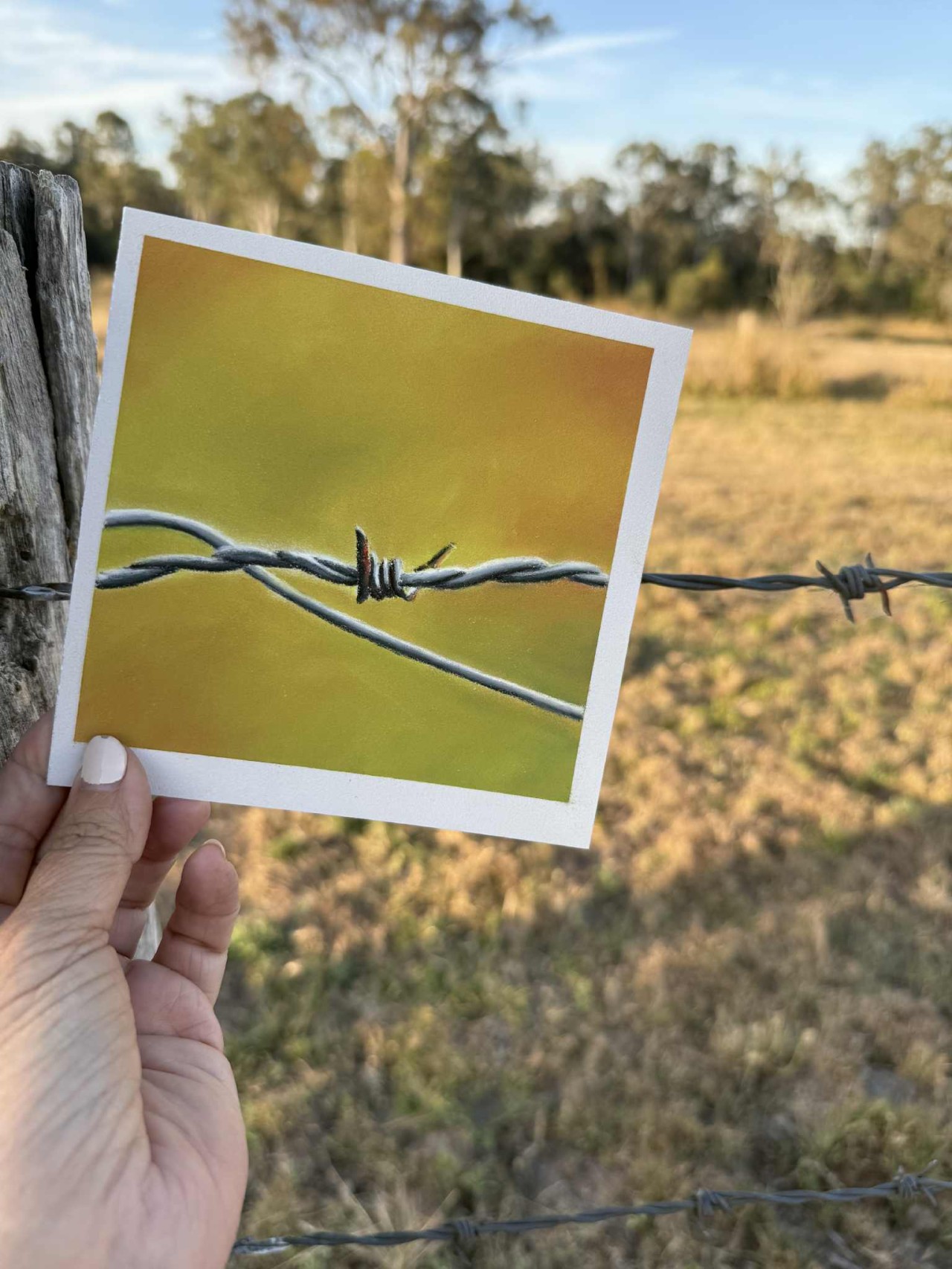
I teach you how to create this little barbed wire piece during the class. Everything you need is in the PDF workbook you'll receive when you register.