After the Last Stroke
 Kerri Dixon

What Should You Do With a Finished Pastel Painting?
After the Last Stroke: What Should You Do With a Finished Pastel Painting?
There's a wonderful moment when you finally put your pastel pencil down, step back from your artwork and think:
"I think it's finished."
But then comes the question nobody thinks much about while they're learning to draw:
What do I do with it now?
Should you spray it with fixative? Can you stack it with your other paintings? How should you store it? Do you need special glass when you frame it? And how do you photograph it without completely changing the colours?
These are some of the questions I'm asked most often, which is why I created my After the Last Stroke guide—to cover what happens after the drawing itself is finished. After the last stroke
Before You Do Anything, Walk Away
My first step is surprisingly simple.
I leave the artwork alone.
After staring at a painting for hours, it's very difficult to see it objectively. Coming back later with fresh eyes often reveals a highlight that needs brightening, an edge that needs softening or a shadow that could be slightly deeper.
Sometimes I come back and realise it doesn't need anything at all.
Knowing when not to touch a painting is a skill too.
Once I'm happy, I'll sign the artwork using a pastel pencil that complements the colours rather than competes with them. I also add the year to the back so I can look back later and see how my work has developed. After the last stroke
Should You Use Fixative on Soft Pastel?
My personal answer is no.
I've tried different fixatives over the years and found they can darken colours or dull the beautiful velvety finish that makes pastel so special.
More importantly, I don't find fixative necessary for my finished pastel paintings.
Mine will generally either be stored beneath glassine or professionally framed behind glass. In both cases, the pastel surface is already protected. After the last stroke
My approach is simple:
I'd rather protect the artwork around the pastel than change the pastel itself.
6abb5d4e2f6d9_lg.png)
How to Store Finished Pastel Artwork
Soft pastel doesn't dry like paint. The pigment remains on the surface of the paper, held by the tooth of the surface, so it needs protection from rubbing and unnecessary contact. After the last stroke
I cover each finished painting with glassine paper and store it flat whenever possible.
Don't use ordinary tissue paper, and never stack pastel paintings directly against one another. Tissue can stick to the surface and direct contact between artworks can transfer pigment. After the last stroke
You don't need an expensive storage system when you're starting. An archival portfolio or flat art drawer is wonderful, but even a clean, sturdy storage box can work.
If I'm transporting an unframed painting, I cover it with glassine and sandwich it securely between two rigid boards. The less movement, the better. After the last stroke
Photograph Every Artwork You Finish
If there's one habit I wish every artist would develop, it's this:
Photograph every finished artwork before it leaves your studio.
You might think you'll never sell prints, enter an exhibition or need a high-resolution photograph.
Photograph it anyway.
I've gone back to old artwork photographs years later and used them for calendars, greeting cards, teaching materials, marketing and competitions. Those opportunities would have disappeared if I hadn't photographed the original while I still had it. After the last stroke
You don't need expensive photography equipment either.
A modern smartphone can produce excellent results. Good, even lighting and accurate colour are more important than owning an expensive camera. After the last stroke
I prefer soft natural daylight—an overcast day is wonderful. Avoid direct sunlight, strong shadows, flash and mixed lighting.
6abb5de347d01_lg.png)
Keep your phone or camera square to the artwork so you don't distort its shape, and let the artwork fill as much of the photograph as possible without cropping the edges. After the last stroke
When editing, the goal isn't to improve your artwork.
It's simply to make the photograph look as close to the original as possible.
Straighten, crop, adjust exposure and white balance and make minor colour corrections where necessary. Then keep your original high-resolution image backed up somewhere safe. After the last stroke
Framing Soft Pastel Artwork
A finished pastel should be protected behind glass.
The glass provides a barrier against dust, moisture, accidental knocks and those curious fingers that always seem to want to touch artwork! After the last stroke
My framing philosophy is:
The frame should make the artwork look good—not the other way around.
6abb5e2b46b5d_lg.png)
I tend to use natural timber or neutral oak frames with off-white mats because they work across almost all of my wildlife and nature paintings.
I've also standardised most of my artwork sizes to quarter, half and full sheets of Pastelmat. This means I can reuse frames instead of buying a new one for every painting, which has saved me a considerable amount of money over the years. After the last stroke
When mounting my pastel paintings, I hinge the artwork only along the top edge using acid-free framing tape.
Taping all four sides doesn't allow the paper to naturally expand and contract with changes in temperature and humidity and can cause it to buckle. After the last stroke
And beautiful framing doesn't necessarily need to cost hundreds of dollars. A ready-made frame can be upgraded with acid-free mat board, foam core backing, proper hinging tape and professional backing tape to create a much better presentation. After the last stroke
Create Your Own Finishing Routine
Once you've finished your next painting, don't simply put it in a cupboard and forget about it.
Give yourself time to look at it with fresh eyes.
Sign it.
Photograph it.
Save and back up the photograph.
Protect the surface.
Store it safely.
And when you're ready, frame it in a way that protects the artwork without competing with it.
It's also worth recording the artwork's title, size, medium and date while all of that information is fresh in your mind. After the last stroke
We spend so much time concentrating on how to create artwork that it's easy to forget this final part of the process.
But you've put hours of observation, patience and creativity into your painting.
Those few extra minutes after the last stroke can help make sure it's still there to enjoy many years from now.
And perhaps most importantly—before you race off to start the next painting—take a moment to enjoy the fact that you finished this one.
That's worth celebrating too.
Want to learn about Soft Pastels?
Click on the button to register and get instant access to the free Pastel Basics for Beginners workshop.
Listen as I walk you through the essentials supplies needed to get started in Pastel painting.
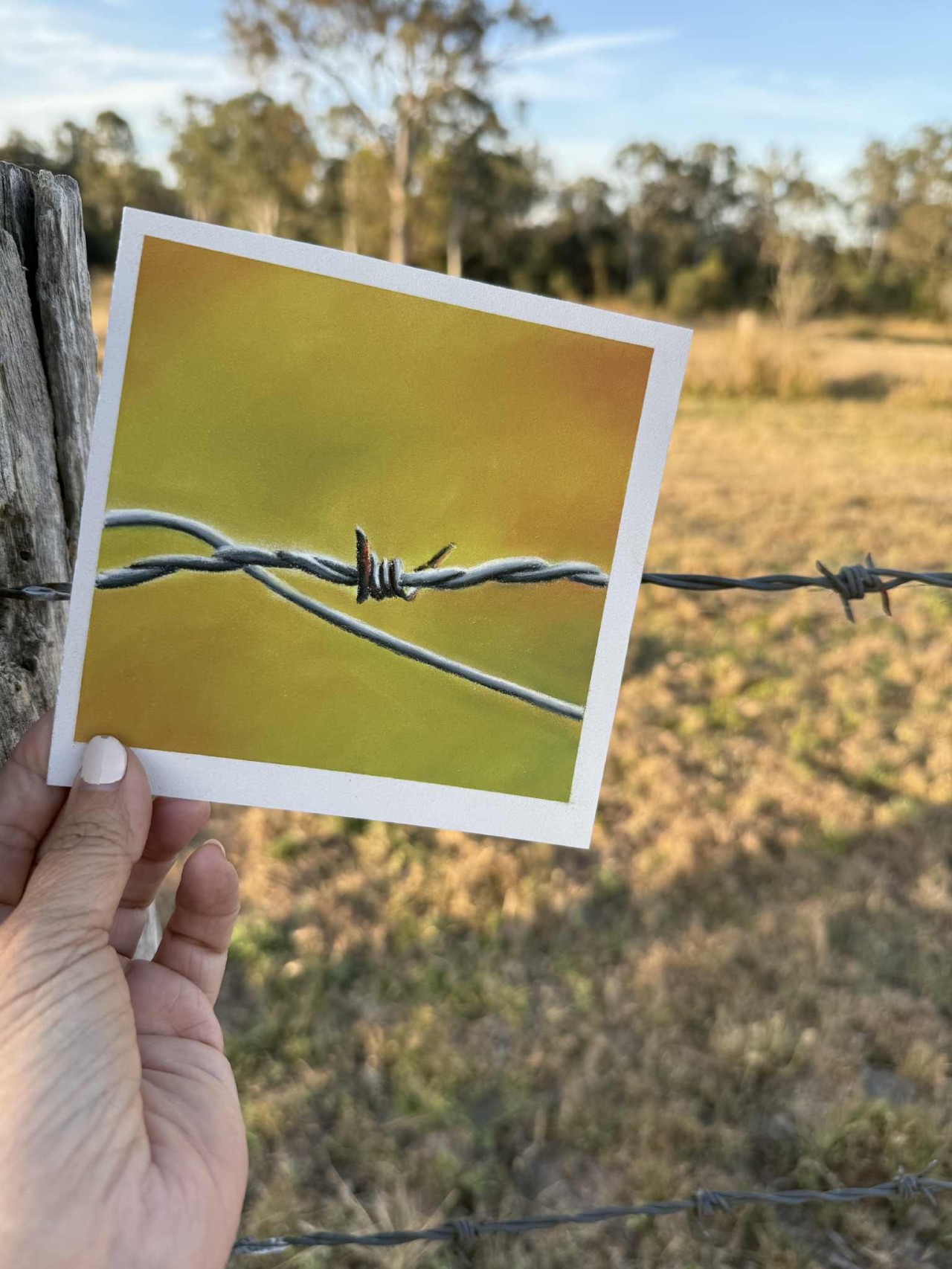
I teach you how to create this little barbed wire piece during the class. Everything you need is in the PDF workbook you'll receive when you register.