Meet the Master - Mary Cassatt
 Kerri Dixon

Discover Mary Cassatt’s pastel techniques, bold compositions and artistic story, and what today’s artists can learn from this Impressionist master.
Meet the Masters: Mary Cassatt – What Her Pastels Can Teach Us Today
When we think of the Impressionists, names like Monet, Renoir and Degas probably spring to mind first. But there was another artist working alongside them whose work I think is particularly interesting for pastel artists — Mary Cassatt.
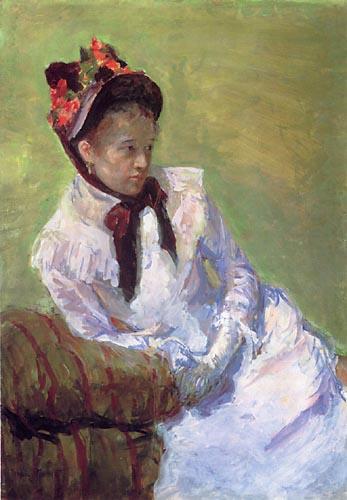
Cassatt was an American artist who spent much of her adult life in France and became one of the few women associated with the Impressionist movement.
She's probably best known for her beautiful paintings and pastels of women and children, but when you start looking more closely at her work, there's so much more to learn.
Her compositions were often unusual. She cropped figures in unexpected places. She allowed areas to remain loose and unfinished. She used coloured paper as part of the artwork itself.
And, of course, she was an incredible pastel artist.
So rather than simply looking at the story of Mary Cassatt, I want to look at her as artists ourselves.
What can we learn from the way she worked?
A Woman Determined to Become an Artist
Mary Cassatt was born in Pennsylvania in 1844 into a well-to-do family. She began studying at the Pennsylvania Academy of the Fine Arts when she was still a teenager.
Becoming a professional artist wasn't exactly the expected career path for a young woman at the time.
Women didn't have access to all the same training opportunities as men, including studying from nude models, which was considered an essential part of an artist's education.
Cassatt eventually became frustrated with the limitations and headed to Europe.
She studied the Old Masters, travelled, copied paintings in galleries and continued developing her skills. Eventually Paris became her home.
And this is something I love about looking back at artists like Cassatt.
She didn't wait for the art world to make things easy for her.
She found another way.
Enter Edgar Degas
One of the most important artistic relationships in Cassatt's life was with Edgar Degas.
Cassatt admired Degas's work before she actually knew him, and Degas in turn recognised something special in hers. He invited her to exhibit with the Impressionists in 1879.
The two became friends and influenced each other's work for many years.
And one thing they certainly had in common was pastel.
Today we can walk into an art shop and choose from pastel sticks, pastel pencils, PanPastels and hundreds of colours.
Cassatt didn't have our modern pastel pencils to sharpen to a beautiful little point whenever she needed to draw an eyelash.
She was predominantly working with pastel sticks.
Yet when you look closely at some of her portraits, particularly the skin, you'd swear she'd had access to something far more precise.
Where Have All the Pastel Marks Gone?
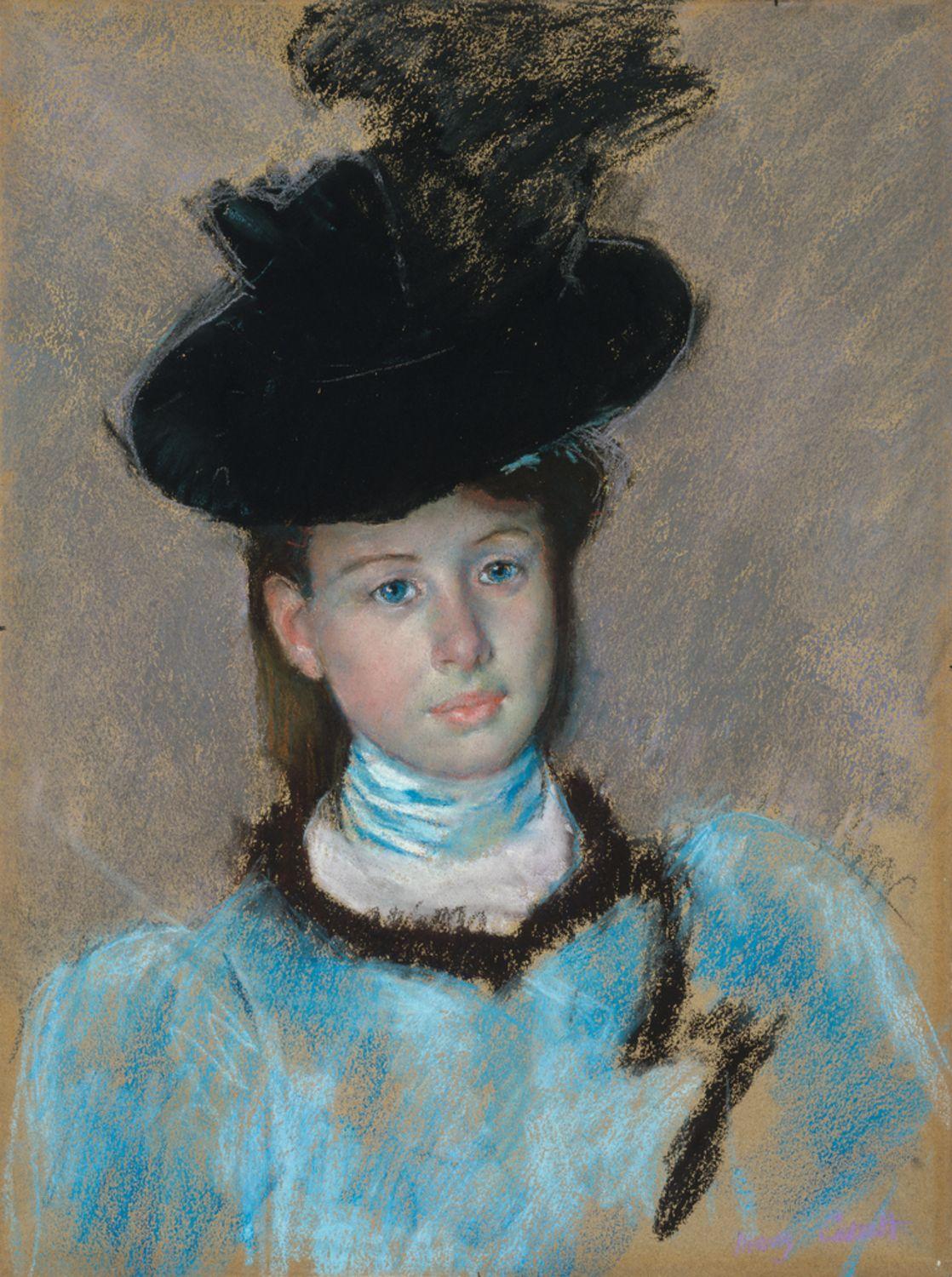
This was something that really caught my attention when looking closely at Cassatt's work.
Look at some of her faces and the skin is incredibly smooth.
There are beautiful, subtle transitions between the pinks, creams, yellows and cooler tones. In places it's difficult to see an individual pastel stroke at all.
Then move your eye into the clothing, hair or background and suddenly the pastel marks are everywhere.
That's not an accident.
Conservation research by The Metropolitan Museum of Art has shown that Cassatt varied the way she handled pastel considerably within a single artwork.
In some areas she laid down thicker, obvious strokes. In others she blended and worked the pastel into the paper to create extremely fine, smooth passages.
That's a really important lesson for us.
You don't have to use pastel in the same way across an entire painting.
Think about wildlife.
The smooth surface of an eye might require one approach.
Short fur around the muzzle might require another.
Long hair catching the light might be represented with much looser marks.
And your background may only need a suggestion.
Sometimes I think we become so focused on developing a particular "technique" that we forget we're allowed to change technique depending on what we're trying to describe.
Cassatt certainly did.
What Was She Drawing On?
This was another question I wanted answered.
We have wonderful pastel surfaces available today — Pastelmat, sanded papers and boards specifically manufactured to hold pastel.
So what was Cassatt using?
Museum records show that she worked on both wove paper and laid paper, and quite often the paper was coloured.
One of her favourites appears to have been blue paper.
She would deliberately allow areas of that paper to remain visible between her pastel marks.
Rather than completely covering the surface, the colour underneath became part of the painting.
If you're a pastel artist, that probably sounds very familiar.
It's exactly why choosing the colour of our Pastelmat can make such a difference. That base colour can peek through the fur, background and looser passages and help unify the entire painting.
Cassatt was using that principle more than a century ago.
The Colours We See Today Aren't Always Her Colours
Here's a fascinating little bit of art history.
Some of Cassatt's coloured papers don't look today the way they did when she worked on them.
Many nineteenth-century coloured papers contained dyes that weren't particularly lightfast. Over more than a century, some of those colours have faded and changed.
In some works, paper that now appears brownish was originally blue.
Imagine that difference!
We can look at an old artwork and assume the artist deliberately chose that lovely warm brown background when the artist herself may have been looking at blue.
Interestingly, many of Cassatt's pastel pigments have remained remarkably vibrant while the paper underneath them has changed.
It's a good reminder that when we're studying historical artwork, we're not necessarily seeing exactly what the artist saw when they stepped back from the easel.
These Weren't Just Pastel Sketches
Cassatt also treated pastel as a serious finished medium.
Some of her pastel works were created on paper mounted to canvas and stretched or attached over a wooden support.
They weren't simply quick drawings tucked into a sketchbook.
They were finished artworks intended to stand alongside paintings.
And I love that.
Even today you occasionally hear someone refer to pastel as a "drawing medium", almost as though it sits somewhere below oil or acrylic painting.
Artists like Cassatt were producing sophisticated finished works in pastel well over a century ago.
I think we can safely stop worrying about whether pastel counts as a proper painting!
Look at the Composition
Cassatt wasn't only interesting because of her pastel technique.
Her compositions were incredibly modern.
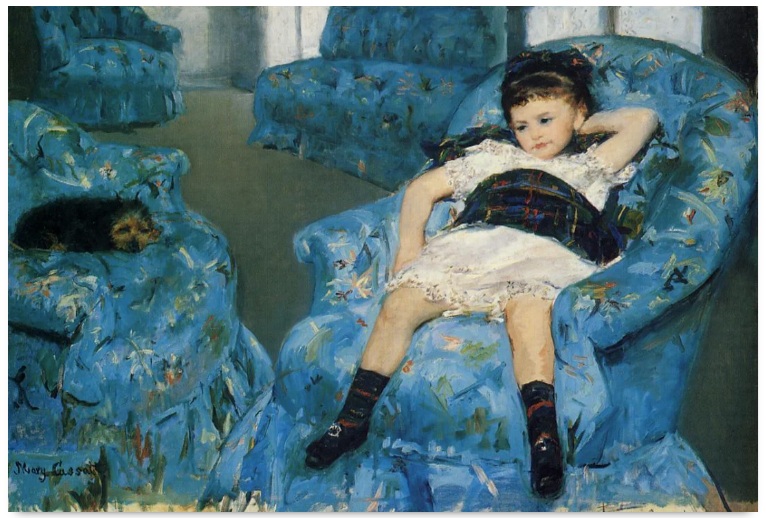
One of my favourites to study is Little Girl in a Blue Armchair, painted in 1878.
A little girl is sprawled casually across a huge blue chair while a small dog sleeps nearby.
She isn't beautifully posed.
She's slumped.
The furniture dominates the room. Things are cropped. The perspective feels unusual. The composition almost has the feeling of a photograph taken in an unguarded moment.
And that's precisely what makes it interesting.
Ask yourself:
Would I have composed it that way?
Most of us probably would have placed the child nicely in the middle!
Cassatt often resisted that temptation.
The Japanese Influence
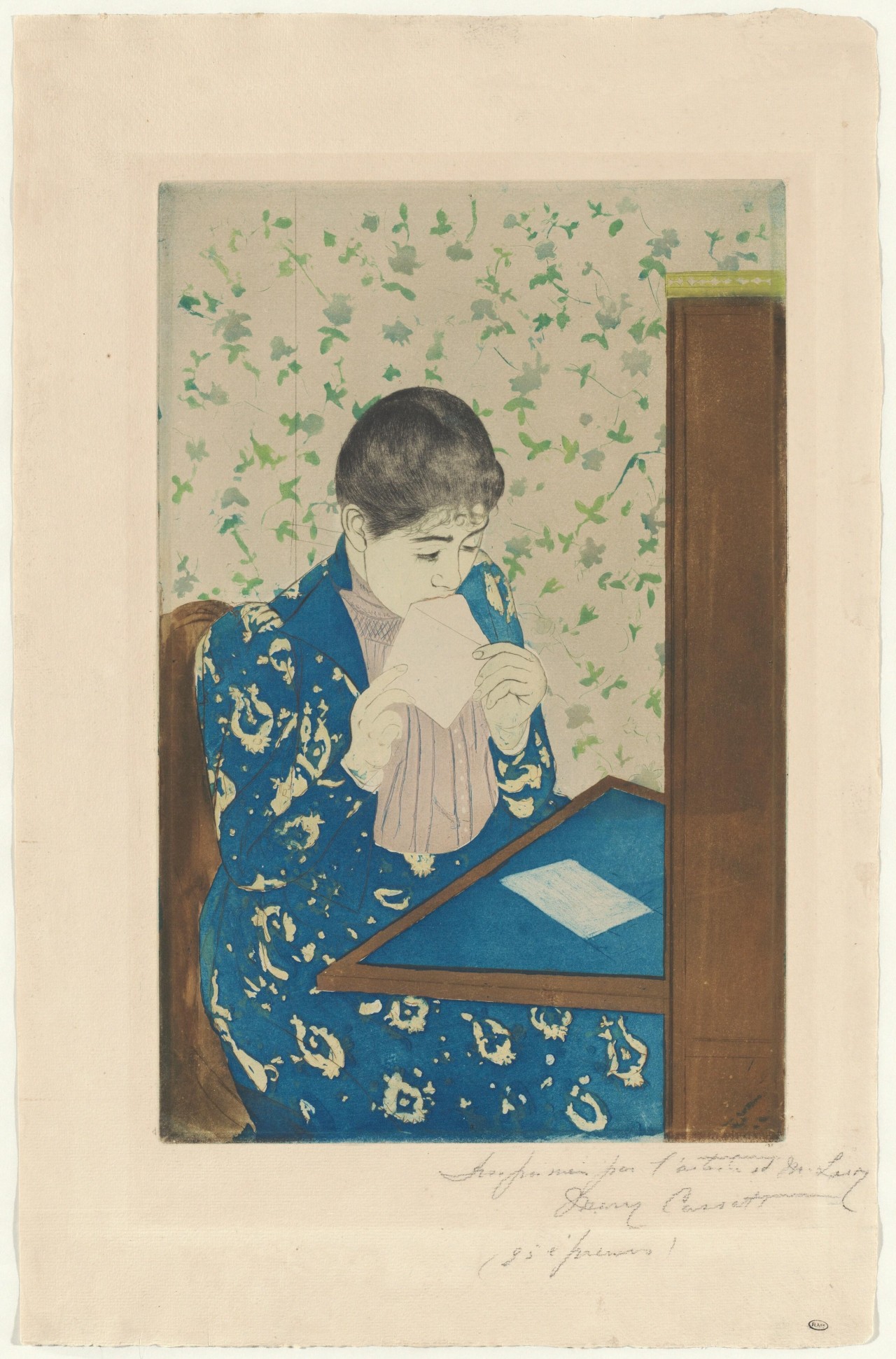
Another major influence on Cassatt's compositions came from Japanese ukiyo-e prints.
After seeing a major exhibition of Japanese prints in Paris in 1890, she became fascinated by them.
You begin seeing flattened spaces, strong shapes, pattern, unusual viewpoints and bold cropping in her own prints and paintings.
And this is something I think is incredibly relevant to wildlife artists.
We can become very attached to our reference photograph.
There's the animal.
There's the photograph.
Therefore that's the painting.
But it doesn't have to be.
Move the crop.
Cut part of the animal out.
Move the subject away from the centre.
Simplify the background.
Look for interesting negative shapes.
Your reference photograph is simply the raw material for your composition.
Cassatt was looking at the world around her and deciding how she wanted us to see it.
We can do exactly the same thing.
Painting the Ordinary
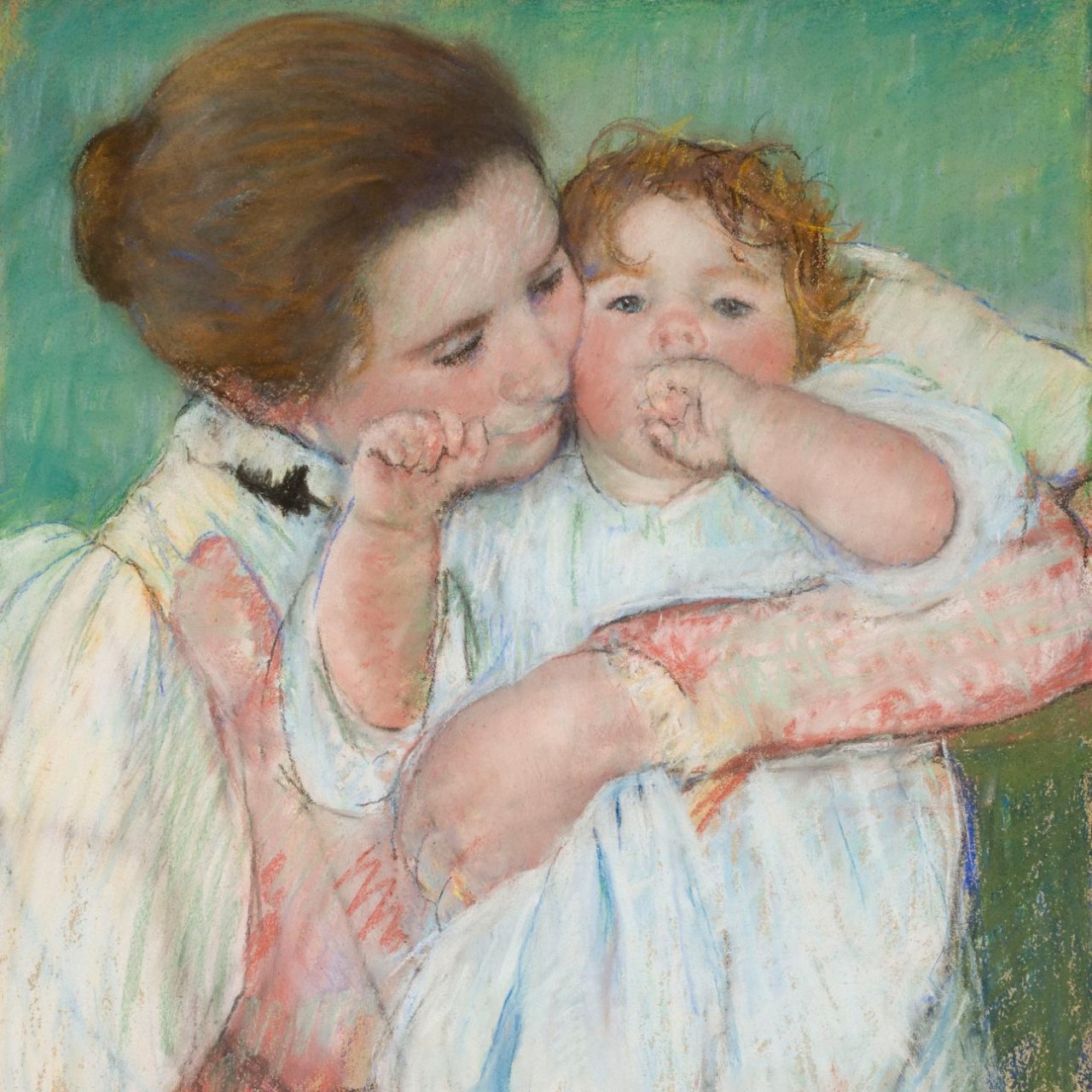
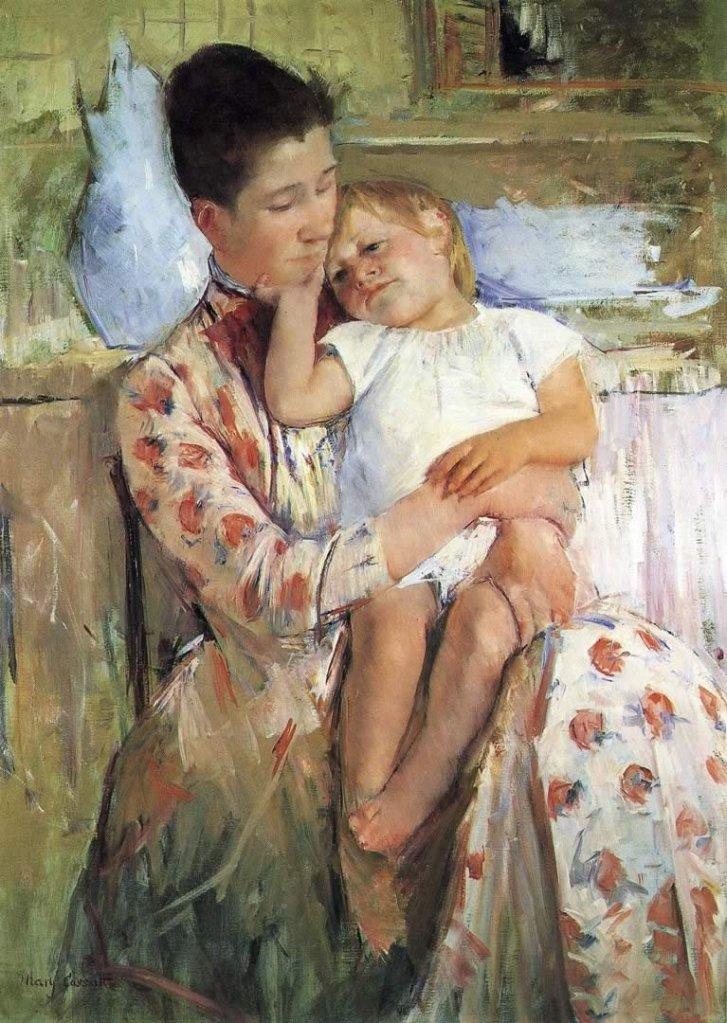
Cassatt is particularly famous for her paintings of mothers and children.
For a long time these were sometimes dismissed as sentimental domestic subjects.
But there's another way of looking at them.
Cassatt painted the world available to her.
Her male contemporaries could freely wander cafés, bars and nightlife looking for subjects. A respectable woman of Cassatt's social position couldn't necessarily do the same.
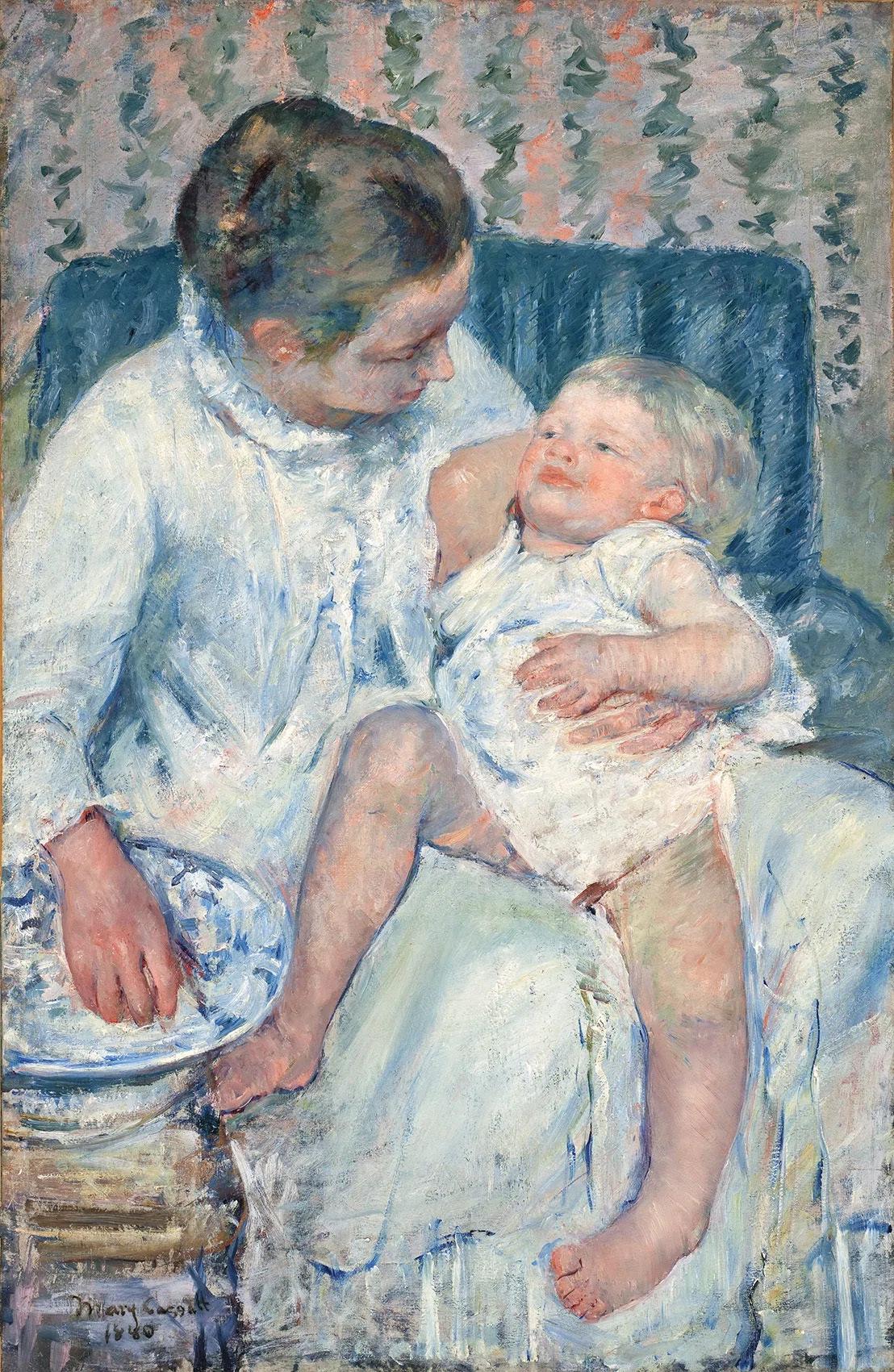
So she painted women reading, children playing, mothers bathing babies, women attending the theatre and the quieter moments of everyday life.
And she made those moments worthy of serious art.
There's another lesson in that for us.
You don't have to travel halfway around the world to find something worth painting.
Maybe it's the old horse standing in the afternoon light.
A magpie sitting on the fence.
Your dog asleep beside the window.
A bird splashing in the birdbath.
Sometimes we're so busy looking for the spectacular reference photograph that we overlook the beautiful ordinary moments happening right in front of us.
You Don't Need to Explain Everything
Perhaps my favourite lesson from Cassatt's pastel work is knowing where to finish and where to stop.
Look closely at one of her pastels.
Some areas are beautifully developed.
Others are simply suggested.
You might see paper showing through. A few strokes become fabric. A loose scribble becomes hair. An edge disappears completely.
Yet our brain happily fills in the missing information.
That's particularly useful for realistic artists.
Realism doesn't mean rendering every square centimetre to exactly the same level.
In fact, doing that can sometimes make a painting less interesting.
You can have beautifully rendered detail around your focal point and allow everything else to become quieter.
You don't need to paint every hair.
You don't need to blend every pastel mark.
You don't need to explain everything.
Sometimes the viewer enjoys being allowed to do a little of the work.
What Can Mary Cassatt Teach Us?
So after looking at Cassatt's work, there are a few things I'd love you to take back to your own art.
Be braver with your compositions. Don't automatically accept the composition your camera gave you.
Use your surface. The colour underneath your pastel can become part of the finished artwork.
Change your mark-making. Smooth blending and loose visible strokes can happily live in the same painting.
Decide where the detail belongs. Not everything deserves equal attention.
Look at the ordinary. Some of the best subjects may already be around you.
And perhaps most importantly:
Don't confuse realism with describing everything.
Cassatt could create beautifully convincing skin with incredibly subtle blending and then, only centimetres away, leave obvious strokes of pastel and exposed paper.
She knew what needed explaining and what could simply be suggested.
More than a hundred years later, that's still a pretty good lesson for any artist.
So next time you're working on a pastel and find yourself carefully blending, polishing and perfecting every last centimetre, perhaps ask yourself:
What would happen if I left some of this alone?
Mary Cassatt might just tell you to put the pastel down.
Kerri xx
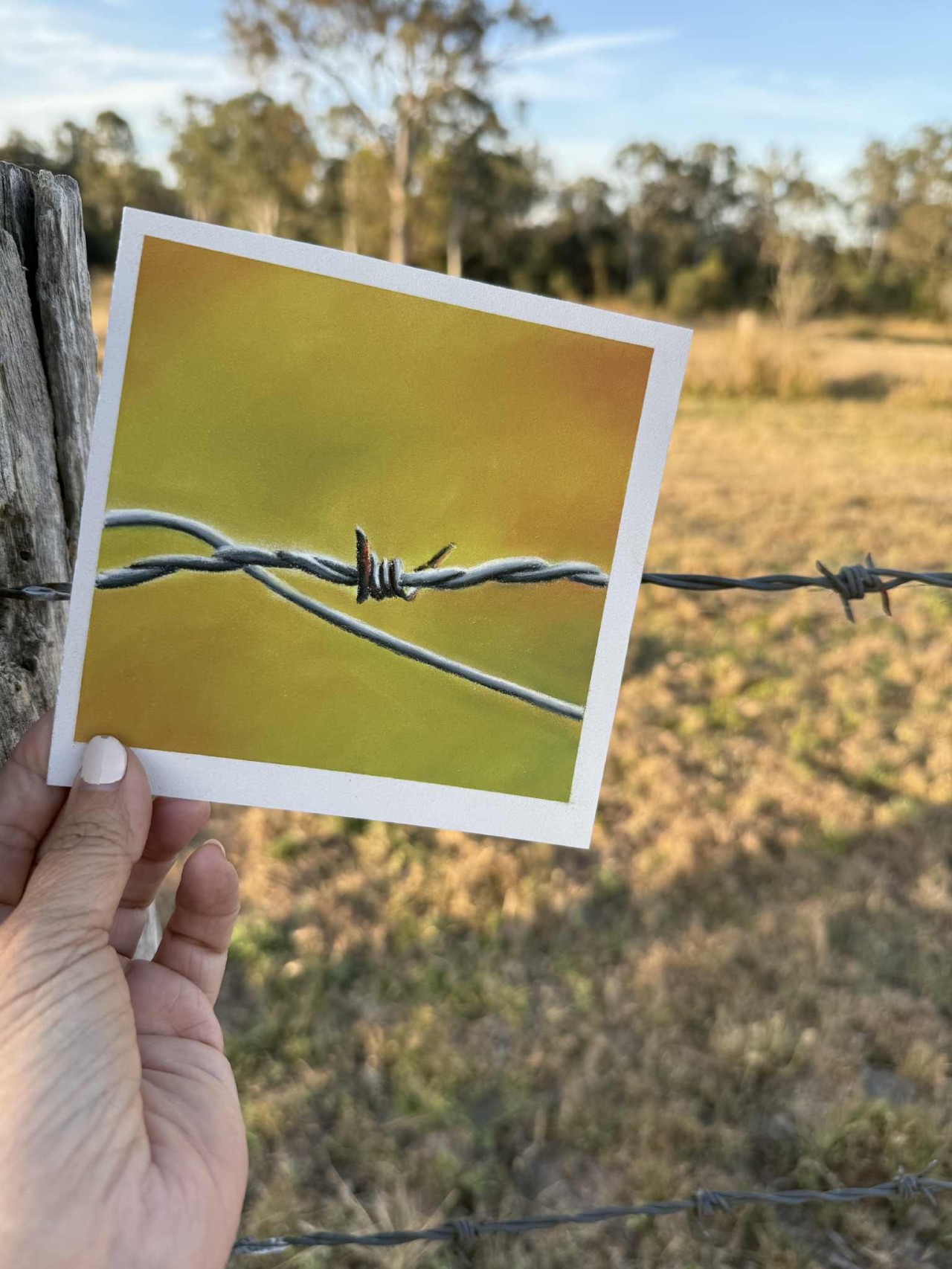
Want to learn about Soft Pastels?
Click on the button to register and get instant access to the free Pastel Basics for Beginners workshop.
Listen as I walk you through the essentials supplies needed to get started in Pastel painting.
I teach you how to create this little barbed wire piece during the class. Everything you need is in the PDF workbook you'll receive when you register.